For years, the clocks going back have traditionally marked the beginning of a busier period for UK bodyshops. Shorter days, poorer visibility, wetter roads and more challenging driving conditions typically mean more collisions – and more vehicles requiring repair.
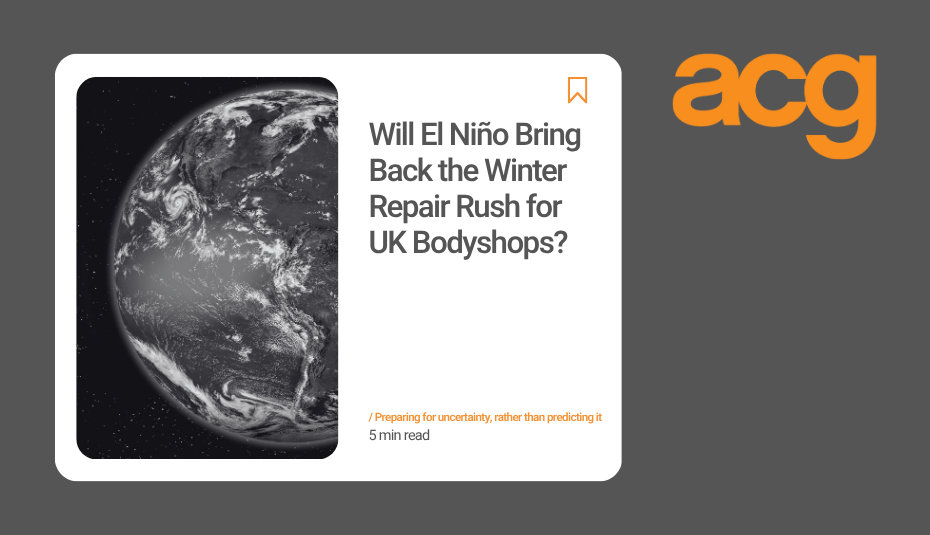
But post COVID-19, that traditional winter influx has never fully returned. With an unusually strong El Niño event now developing, could winter 2026/27 finally bring a significant increase in accident repair volumes?
For bodyshop owners, the bigger question may not be exactly how many repairs arrive, but whether the business is financially prepared to respond if demand rises sharply.
Will UK bodyshops see more repairs this winter?
There is evidence that the change in seasons can have a measurable effect on collision volumes. The AA reported that calls to its Accident Assist service increased by 11% in the fortnight following the October 2023 clock change, compared with the two weeks beforehand. The AA attributed the rise to factors including darker evenings, wet weather, slippery roads and low-lying sun.
That provides an important reminder for bodyshop owners: the transition into winter can create a genuine increase in accident-related demand.
The potential impact of this year’s weather is particularly interesting. The UK Government’s September 2026 assessment says a significant El Niño is likely towards the end of 2026, with some forecasts predicting an event among the strongest on record. However, it also stresses that the impact on UK weather is uncertain.
Current modelling suggests that between October and December there could be a slightly increased chance of stronger westerly winds, low-pressure systems, stormier conditions, heavy rainfall and flooding. In early 2027, there may also be an increased risk of easterly or northerly winds and short periods of colder weather.
The Met Office similarly says that El Niño increases the likelihood of wetter and stormier conditions during the late autumn and early winter period, although it emphasises that seasonal forecasts cannot predict individual weather events.
So, will there be an unprecedented increase in bodyshop repairs? Not necessarily. There is currently no reliable basis for predicting an unprecedented repair surge. What the evidence does suggest is a potentially more unsettled winter, creating the conditions for periods of increased collision and repair demand.
For bodyshops, preparation rather than prediction is therefore key.
Why winter demand can create a cash-flow problem
A busy bodyshop is not automatically a cash-rich bodyshop.
If repair volumes increase, so do the costs associated with completing those repairs. More vehicles through the workshop can mean increased expenditure on parts, labour, utilities, paint materials, subcontractors and other operating costs.
Winter can add further pressure. Heating and operating a bodyshop, including maintaining appropriate conditions for repair and paint processes, can increase energy consumption.
At the same time, payment for completed insurance repairs may not arrive immediately. ACG notes that bodyshops can face payment terms of 30–60 days or more, creating a potentially significant gap between completing the repair and receiving the money.
That is why strong financials, and healthy cash flow will be critical for bodyshops this winter.
The businesses best positioned to capitalise on a sudden increase in repair demand will be those that can continue paying staff and suppliers, purchasing parts and maintaining workshop capacity while waiting for insurers or networks to settle invoices.
How can bodyshops prepare for a potential winter repair surge?
Bodyshop owners should consider three key areas before winter arrives:
- Understand your cash position.
Look beyond the bank balance. Review work in progress, outstanding invoices, expected receipts and upcoming commitments. A business can be profitable while still experiencing cash-flow pressure. - Protect workshop capacity.
If adverse weather creates a spike in demand, having sufficient cash available to purchase parts and maintain staffing levels can help prevent financial constraints from limiting repair capacity. - Consider invoice funding before demand increases.
Waiting until cash flow becomes stretched can make it harder to respond to an unexpected surge. Having a funding facility in place can provide additional flexibility when it matters most.
How can ACG support bodyshops this winter?
ACG provides specialist funding for UK bodyshops, repair centres and garages, helping businesses unlock cash tied up in approved insurance repair invoices.
Through ACG’s Authorised Funding, approved repair invoices can be submitted and, once validated, payment can be arranged within 24 hours. ACG also offers a pay-as-you-go model, allowing eligible customers to choose when they use the service – particularly useful when repair volumes fluctuate seasonally.
Rather than waiting weeks for an insurer or repair network to pay, bodyshops can access funds sooner and use that cash to support payroll, supplier payments, parts purchasing and everyday operating costs.
For a winter that could bring greater weather volatility, that flexibility could be valuable.
Preparing for uncertainty, rather than predicting it
Nobody can say with certainty how many additional accidents El Niño will ultimately generate across the UK. The science is clear that its effects on UK weather are less predictable than its impacts in some other parts of the world.
What bodyshop owners can control is their preparation.
If winter brings the return of the traditional post-clock-change repair surge – or simply creates a series of shorter, sharper peaks in demand – the businesses with strong financial foundations and reliable access to working capital will be better placed to keep repairs moving.
This winter, the priority should not be predicting the weather. It should be making sure your cash flow is ready for whatever the weather brings.
Frequently Asked Questions
Will El Niño increase car accidents in the UK?
El Niño can influence UK weather patterns, but its precise effects are uncertain. Current forecasts indicate a slightly increased chance of stormier, wetter conditions in late 2026 and a possibility of colder spells in early 2027.
Does the clock change increase accident repairs?
The AA recorded an 11% increase in Accident Assist calls during the fortnight after the October 2023 clock change compared with the preceding fortnight, although this was based on AA internal data and does not represent all UK collisions.
How can bodyshops improve winter cash flow?
Bodyshops can improve resilience by closely monitoring work in progress and outstanding invoices, controlling operating costs and considering invoice funding to access money from completed, approved repairs sooner.
How does ACG funding work for bodyshops?
ACG funds eligible insurance-approved and repair-network invoices, with payment arranged within 24 hours once the repair documentation has been validated. Its pay-as-you-go model can provide flexibility during periods of changing repair demand.

 01925 591 540